Finding Your Perfect Companion: A Guide to Trusted Writing Journals
Why the Right Journal Matters More Than You Think
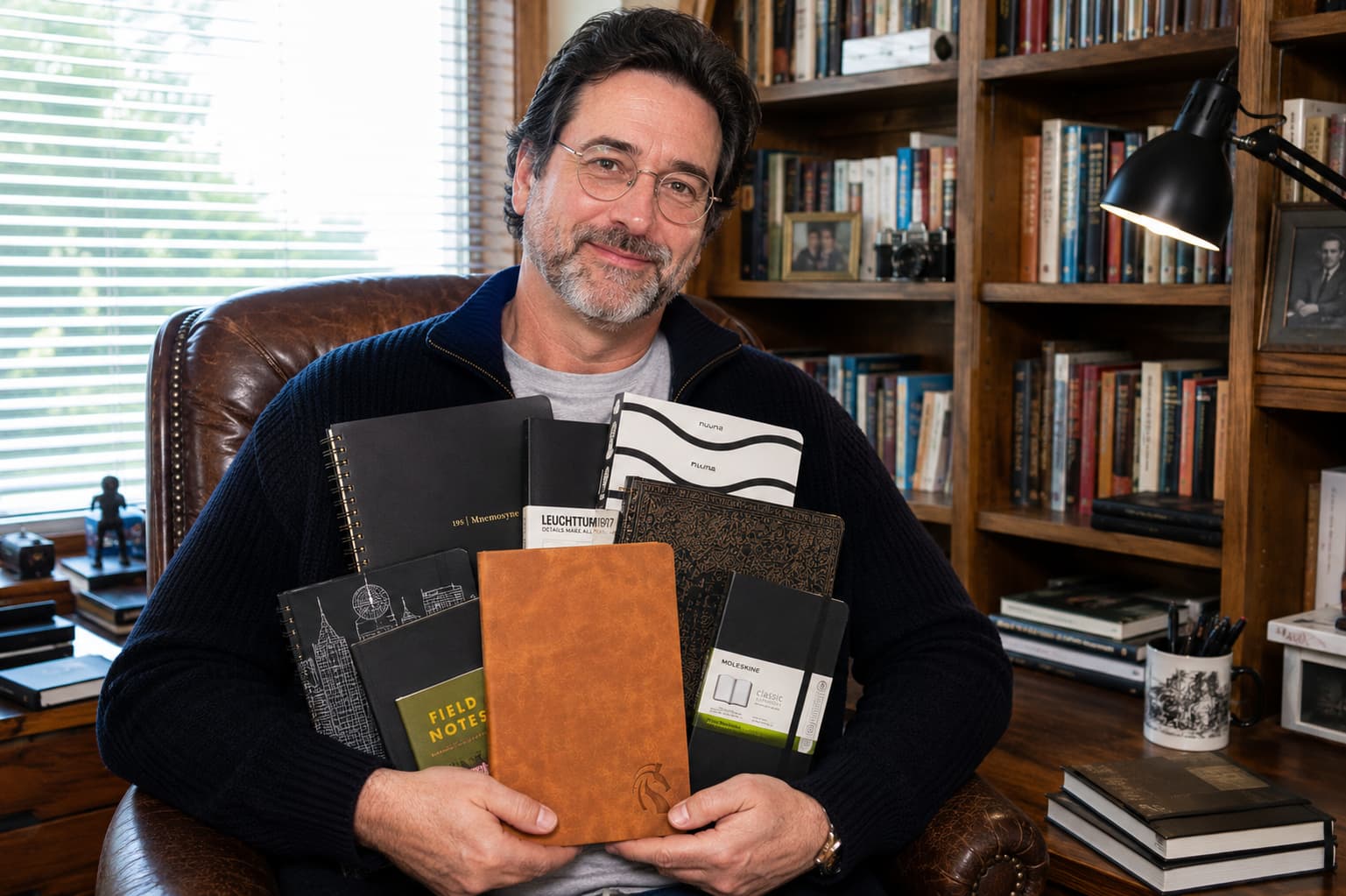
After twenty years of filling notebooks with drafts, ideas, and the occasional shopping list, I have learned one thing: the journal you write in shapes what you write. A flimsy notebook with feathery paper can make even a Pilot G2 feel scratchy. A stiff spine that refuses to lie flat can turn a good writing session into a battle. Over time, I have tested dozens of brands, from cheap spiral notebooks to handcrafted leather-bound books from Etsy. I have settled on a handful of trusted writing journals that I return to again and again. Not because they are the most expensive, but because they get out of my way and let me work.
This guide reflects my own experience. I am not affiliated with any brand. I just care about the feel of the page under my hand and the quiet satisfaction of a notebook that works the way I do.
What Makes a Journal Trustworthy?
A trusted writing journal does not need gimmicks. It needs good paper, sturdy construction, and a design that suits your habits. For me, the most important feature is the paper. Tomoe River paper, for example, is famously thin yet handles fountain pens without bleeding. I have used it in Hobonichi Techo planners and Midori MD notebooks, and it never fails to impress. But Tomoe River is not for everyone. Some writers prefer the smooth, coated pages of a Rhodia pad, which make a Lamy Safari glide effortlessly. Others want the thicker, creamier paper of a Leuchtturm1917, which holds up to heavy erasing and ink washes.
Binding matters too. A sewn binding, like the one in a Moleskine classic, allows the notebook to open flat. A stapled or glued binding can cause pages to loosen over time. I have lost too many notes to a falling-apart spiral notebook. That is why I now choose hardcover or lay-flat softcover notebooks from brands I trust.
The Brands I Keep Coming Back To
Moleskine
Moleskine is the brand many people think of first. Their black hardcovers are iconic. I have used them for years, and they are perfectly serviceable. The paper holds ballpoint and gel pens well, though fountain pen users might notice some ghosting. Moleskine notebooks are widely available on Amazon and in bookstores, which makes them an easy recommendation for beginners. They are not my absolute favorite, but they are reliable. For a writer starting out, a Moleskine is a solid choice.
Leuchtturm1917
Leuchtturm1917 notebooks have won me over completely. The paper is slightly off-white and smooth, handling a wide range of pens. The numbered pages and table of contents are a boon for bullet journaling. I use a Leuchtturm1917 for my daily morning pages, a practice I borrowed from Julia Cameron's The Artist's Way. The notebook lies flat, the ink dries reasonably fast, and the pocket in the back holds loose notes. If I had to pick just one trusted writing journal for the rest of my life, this would be it.
Rhodia
Rhodia pads are my go-to for quick drafts and brainstorming sessions. The orange cover is unmistakable. Their paper is coated, so fountain pen ink sits on the surface and dries cleanly. I use a Rhodia No. 16 pad with a Uni-ball Jetstream when I want a smooth, fast-writing experience. The grid or dot grid options are great for sketches and diagrams. Rhodia is not a journal in the traditional bound sense, but the staple-bound pads work wonderfully for writers who need a portable, no-fuss surface.
Field Notes
Field Notes notebooks have a cult following, and for good reason. They are small, rugged, and charming. I keep one in my jacket pocket for capturing ideas on the go. The paper is not fancy, but it holds up to a Pilot G2 or a pencil. The covers are distinctive, with seasonal editions that make collecting them fun. Field Notes are not for long-form writing, but they excel as a capture tool. I use them to jot down journaling prompts or random observations that later become essays.
Midori MD
Midori MD notebooks are minimalist and beautiful. The paper is a joy to write on, with a slight tooth that gives feedback without being rough. I use a Midori MD for my pen and ink testing. It handles everything from a Lamy Safari with a broad nib to a fine Pilot G2. The cover is plain, which I appreciate. It does not scream for attention. If you value simplicity and quality, Midori MD is worth trying.

Hobonichi Techo
The Hobonichi Techo is a planner, but many writers use it as a daily journal. Its thin Tomoe River paper allows for a surprising number of pages in a compact book. I have used the A6 version for a year of daily entries, and it held up perfectly. The paper is so light that you can carry the notebook everywhere. The only downside is that the thin paper can show ghosting if you press hard. But for a lightweight, high-capacity journal, the Hobonichi Techo is unmatched.
How to Choose the Right Journal for You
Finding your own trusted writing journals requires some experimentation. Here are a few questions I ask myself before buying a new notebook:
- What pen do I use most often? A Lamy Safari with a wet nib needs different paper than a Pilot G2.
- Do I write on both sides of the page? Then I need paper that resists bleed-through, like Tomoe River or Rhodia.
- Do I carry the journal everywhere? Softcover or small format (like Field Notes) works best.
- Do I need structure? Numbered pages and an index (like Leuchtturm1917) help with bullet journaling.
- Am I willing to spend more for quality? A well-made journal can last years, so it is worth investing in.
I also recommend buying from a store that allows returns or sampling. Amazon is convenient, but local stationery shops often let you feel the paper before buying. Etsy has handmade options if you want something unique. The best way to learn is to buy a few different notebooks and write in them for a week. You will quickly know what works.
Writing Prompts and Overcoming Writer's Block
Even with the perfect notebook, sometimes the words do not come. Writer's block is a common struggle. I have found that journaling prompts can break the logjam. Simple questions like "What did I learn today?" or "What am I avoiding?" get the pen moving. Julia Cameron's The Artist's Way recommends three pages of stream-of-consciousness writing every morning, done by hand. I have done this practice for years. It clears my head and often sparks ideas for larger projects.
The physical act of handwriting has a different quality than typing. It slows you down. It forces you to shape each letter. Many writers find that ideas flow more freely when they use pen and ink. I keep a Lamy Safari filled with a dark blue ink for this purpose. The ritual of filling the pen and opening my Leuchtturm1917 signals to my brain that it is time to write.
A Few Final Thoughts
There is no single best journal for everyone. What works for me may not work for you. But I have found that the market is full of excellent options, and the brands I have mentioned here are consistently good. Whether you choose a Moleskine, a Leuchtturm1917, a Rhodia pad, or a Field Notes pocket book, you are getting a tool that has been tested by thousands of writers. The key is to commit to one and start writing. The notebook is just a container. The real work happens inside you.
I hope this guide helps you find your own trusted writing journals. Try one. Write in it every day for a month. See how it feels. You might discover that the right paper and binding can transform your writing practice. I know it did for me.
Ends · TRUSTEDWRITINGJOURNALSCORNER